

If your team lives in dbt and wants activation folded into a single ingestion bill, the ingestion-aligned approach wins. If marketing needs to build audiences without filing a ticket, the standalone activation platform wins. The nuance lies in ownership and pricing: engineering-led shops get unified governance and consumption billing, while marketer-led teams get self-service at the cost of managing a second vendor relationship. ownership and pricing: engineering-led shops get unified governance and consumption billing, while marketer-led teams get self-service at the cost of managing a second vendor relationship. Not sure which camp you're in? The comparison below sorts it out fast.
TL;DR:
- Ingestion-aligned activation offers unified governance and billing that simplifies support for engineering-led teams managing dbt models, while standalone platforms favor marketing teams with self-service tools.
- Cost models vary with usage: consumption-based pricing depends on monthly active rows, whereas bundled ingestion and activation costs are influenced by destination number and sync frequency, with enterprise deals favoring existing vendor contracts.
- Vendor lock-in favors a single vendor for ingestion-aligned platforms, offering easier security and roadmap alignment, while standalone platforms provide greater flexibility through multi-vendor support but require managing multiple support relationships.
- Core risks for delay include schema drift, API throttling, and identity mismatches, which affect any architecture and require diligent support and support ticket management.
- Successful migration hinges on thorough discovery, careful model mapping, staged pilots, and stakeholder validation, with timelines typically spanning four to twelve weeks depending on scope and data stability.
Table of Contents
- Hightouch vs Census at a Glance
- What Really Separates These Two Architectures
- How Much Will Hightouch or Census Actually Cost You?
- Which Team Should Own the Activation Platform?
- Planning a Migration Without the Surprises
- Core Feature Comparison: Sync Engine, Destinations, Batch vs Real-Time
- dbt Integration and the Developer Experience
- Audience Building and Marketer Self-Service
- Migration and Implementation: What Actually Slows Teams Down
- When Advisory Help Actually Moves the Needle
- A Faster Path to Revenue Visibility After Activation
- Sources
- FAQ
Hightouch vs Census at a Glance
Both platforms sync data out of your warehouse into the tools your business runs on, but they've drifted apart in who they're built for. Fivetran's acquisition of Census turned this into less of a feature fight and more of a stack-alignment decision: do you want activation folded into your ingestion vendor for unified billing and governance, or run as an independent layer?
Here's how the two architectural philosophies stack up across the dimensions that actually drive a purchase decision:
| Dimension | Standalone activation platform | Ingestion-aligned activation |
|---|---|---|
| Best for | Marketing, RevOps, growth teams needing self-service | Data engineering teams already standardized on dbt |
| Pricing model | Consumption-based (monthly active rows) or destination-based, often layered with CDP features | Bundled into ingestion vendor pricing, model-run or record-based |
| dbt integration | Supported, but secondary to audience-building tools | Deep, native, built around dbt as the source of truth |
| Audience building | Strong, no-code, includes identity resolution and AI decisioning | Basic; assumes marketers work through the data team |
| Destination coverage | Broad, wide long-tail connector list | Curated, focused on core GTM systems with reliability emphasis |
| Governance & observability | Improving, but split across a separate vendor relationship | Unified with ingestion monitoring and lineage |
| Strategic positioning | Standalone activation layer, vendor-agnostic | Ingestion-aligned, single-vendor consolidation |
Before you sign anything, get three answers from every vendor call:
- How does pricing scale if we double our destination count next year?
- Who on our team will actually maintain sync mappings after the honeymoon period ends?
- What happens to our data model when the ingestion vendor changes its schema or pricing tiers?
If a sales rep can't answer the second question with specifics, that's a signal about post-sale support, not just a pricing footnote.
What Really Separates These Two Architectures
The surface-level pitch (both read from your warehouse, both push to destinations) hides real differences in philosophy. Neither platform copies your primary data into a separate persistent store. They read from Snowflake, BigQuery, Redshift, or Databricks directly, which matters for governance since your data never truly leaves your control.
Vendor lock-in and control. An ingestion-aligned platform simplifies your bill and your security review, since one vendor now owns extraction, loading, and activation. It also means your activation roadmap moves at the ingestion vendor's pace. A standalone platform keeps you multi-vendor and flexible, but you're now managing two support relationships instead of one.
Curated depth versus long-tail coverage. A platform chasing composable CDP functionality tends to build wide: hundreds of destinations, audience builders, identity resolution, and increasingly AI-driven decisioning layered directly on the warehouse. That breadth serves marketing teams building campaigns across a dozen ad platforms. An ingestion-aligned tool goes narrower and deeper, prioritizing rock-solid syncs to Salesforce, HubSpot, and a handful of core GTM systems, with observability tooling that data engineers actually want.
Real-time behavior. Neither model instantly matches a true streaming architecture. Both rely on scheduled or triggered syncs against warehouse tables, so "real-time" here usually means minutes, not milliseconds. If you're building next-visit personalization that needs sub-second latency, you likely need a CDC pipeline in front of either tool, not the reverse ETL layer itself.
Identity resolution. This is where marketer autonomy lives or dies. Composable CDP features let a growth marketer stitch together anonymous and known identities without a data engineer writing SQL. The dbt-first approach usually pushes identity logic upstream into your models, which keeps it version-controlled and testable but slower to change.
- Vendor lock-in trades convenience for flexibility.
- Long-tail connector count matters more for marketing-heavy stacks than for engineering-heavy ones.
- Identity resolution ownership tracks directly to who controls the roadmap.
Pro Tip: Ask any vendor for their connector maintenance SLA and whether community-built connectors get the same support priority as first-party ones. A connector that breaks silently after an API update is the single most common cause of "our data stopped syncing" tickets.
How Much Will Hightouch or Census Actually Cost You?
Most reverse ETL pricing falls into two camps: consumption-based, tied to monthly active rows (MAR), or destination and volume-based, tied to how many systems you sync to and how often. Total cost depends heavily on destination count and sync frequency regardless of which model you pick, so the label on the pricing page matters less than your actual usage pattern.
Here's a simple way to model it before you talk to sales:
- Count your monthly active rows. This usually means unique records touched by a sync, not your total warehouse size.
- List every destination you'll sync to today and the three you'll likely add within a year.
- Estimate sync frequency per destination. Hourly syncs to five destinations cost very differently than daily syncs to fifteen.
- Add engineering hours for initial model mapping and ongoing maintenance. This is the cost most buying committees forget.
Three rough scenarios show how the pricing models diverge. A small pilot with two destinations and low row counts usually favors whichever platform has a generous free or entry tier. Growth-stage teams syncing to eight or more destinations with rising row counts often see MAR-based consumption pricing climb faster than expected, since every added table inflates the row count even when destinations stay flat. Enterprise-scale rollouts tend to favor negotiated, bundled pricing where the ingestion vendor relationship already exists and activation gets folded into an existing contract.
Ask sales these questions before signing:
- What happens to billing when we exceed our row or record allotment mid-month?
- Is there a free tier, and does it cover a real pilot or just a sandbox?
- Are ingestion costs bundled into activation pricing, or billed separately even within the same vendor family?
Warehouse compute is the hidden line item nobody quotes. Vendors report their own consumption metrics, but the compute cost of transforming data inside your warehouse for heavy models can outweigh the platform fee itself.
Which Team Should Own the Activation Platform?
Ownership, not feature count, is the deciding factor. Independent comparisons consistently point to the same split: data engineers gravitate toward dbt-first tools because the workflow matches how they already build and test models. Marketing teams gravitate toward no-code audience builders because they don't want to file a ticket every time a campaign needs a new segment.
- If your data team already owns dbt models end to end, an ingestion-aligned tool keeps everything in one governed pipeline.
- If marketing or RevOps needs to build and launch audiences without engineering in the loop, a standalone platform with self-service tools pays for itself in speed.
- If your warehouse is still young and undocumented, defer to the data team regardless of platform. Self-service on top of messy models just moves the mess downstream faster.
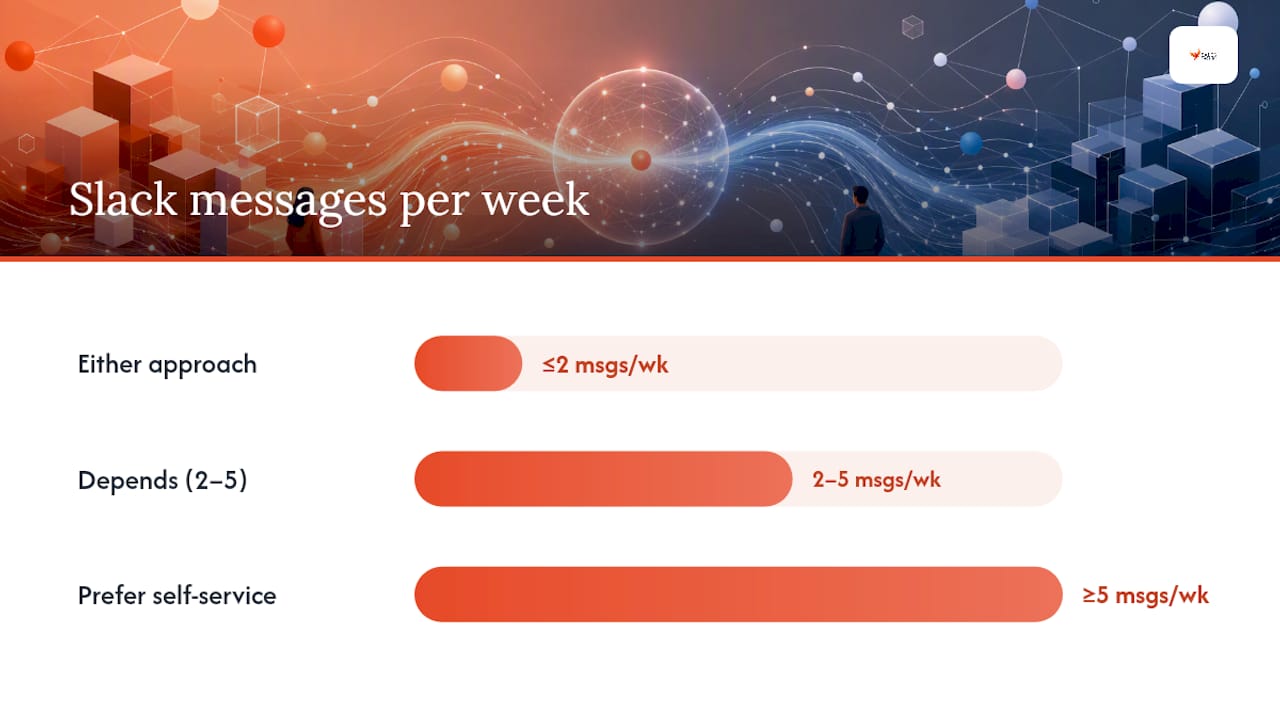
A useful maturity signal: count how many Slack messages your data team gets per week asking for a one-off audience pull. Under two, you're probably fine with either approach. Above five, marketer self-service is likely worth the extra vendor relationship.
Before you commit, run through a short checklist: Who approves new destination connections? Who gets paged when a sync fails at 2 a.m.? What level of self-service does the business actually want, versus what it says it wants in a kickoff meeting?
Planning a Migration Without the Surprises
Every activation rollout, regardless of platform, moves through the same rough phases: discovery and inventory of source tables, model mapping and dbt alignment, a narrow pilot sync, QA and stakeholder approval, then full rollout.
- Discovery and inventory — catalog every table and field destinations will actually consume. Skipping this is the single biggest cause of scope creep.
- Model mapping — align source tables to dbt models so activation reads from tested, documented logic instead of raw tables.
- Pilot sync — pick one high-value destination and run it in parallel with any existing manual process.
- QA and approval — validate record counts, identity matches, and field mappings against a known-good sample.
- Full rollout — expand destination by destination, not all at once.
Realistic timelines run four to twelve weeks, with scope, destination count, and governance requirements as the main drivers of where you land in that range. Schema drift, API rate limits, and identity mismatches are the three risks that blow up timelines most often. Mitigate them with parallel runs against your old process, canary syncs to a single low-risk destination first, and observability alerts on row-count anomalies.
Pro Tip: Run your single highest-value destination as the pilot, not the easiest one. A low-stakes pilot tells you nothing about whether identity resolution and data freshness will hold up when it actually matters.
Core Feature Comparison: Sync Engine, Destinations, Batch vs Real-Time
Under the hood, both platforms run scheduled or event-triggered syncs against your warehouse rather than a true streaming pipeline. The practical difference shows up in destination strategy. A composable CDP-oriented platform tends to prioritize breadth, layering audience building, identity resolution, and AI decisioning directly on top of the sync engine. An ingestion-aligned tool prioritizes depth on a smaller set of core GTM destinations, betting that most teams need Salesforce, HubSpot, and ad platforms to work flawlessly rather than having two hundred connectors of varying reliability.
Sync frequency is configurable in both models, typically ranging from every few minutes to daily batches. Neither replaces a CDC pipeline for sub-second use cases. If your personalization use case genuinely needs millisecond-level freshness, you're looking at a different category of tool entirely, with reverse ETL feeding it rather than serving as the endpoint.
dbt Integration and the Developer Experience
This is where the ingestion-aligned model earns its reputation. Deep, native dbt support with strong observability means data engineers can treat activation as another consumer of their existing model layer, not a separate system requiring duplicate logic. Model dependencies, testing, and version control stay inside the same workflow the team already trusts.
The composable CDP approach supports dbt too, but treats it as one input among several rather than the organizing principle. That's fine for teams where marketing owns segment logic and engineering just needs the pipes to work. It's frustrating for teams where every model change needs to be traceable and testable, since audience-builder logic built in a separate UI doesn't always show up in the same lineage graph as your dbt DAG.
For organizations with heavy dbt investment already, the developer-friendly tooling around models tends to be the decisive factor in the platform decision, outweighing destination count or marketer convenience.
Audience Building and Marketer Self-Service
No-code audience builders are the clearest differentiator between the two architectural camps. Platforms leaning into composable CDP functionality let marketers segment, layer conditions, and push audiences live without writing SQL, backed by identity resolution and increasingly AI-assisted decisioning about which audience a customer belongs to next.
That self-service comes with a real payoff. Marketing teams see faster time-to-value from no-code audience builders, especially when the underlying warehouse is already mature and well-modeled. Without that maturity, self-service just lets marketers build audiences off unreliable data faster, which is worse than not building them at all.
The dbt-first camp assumes segment logic lives in version-controlled models, meaning marketers request changes rather than build them directly. Slower, but every audience definition is auditable and tested the same way any other data model would be.
Migration and Implementation: What Actually Slows Teams Down
Beyond the phased checklist covered earlier, three specific risks account for most delayed rollouts. Schema drift happens when a source table changes shape mid-project, silently breaking downstream syncs until someone notices missing fields in a destination. API throttling hits teams syncing to multiple destinations at high frequency, where rate limits force retries that eat engineering hours nobody budgeted for. Identity mismatches surface when two systems resolve "the same customer" differently, producing duplicate or missing records in the destination.
None of these are platform-specific failures. They're integration-maintenance realities that show up regardless of which architectural camp you choose, and they're exactly why checking peer reviews on sites like G2 for how a vendor handles support tickets during exactly these scenarios is worth the extra hour before you sign.
When Advisory Help Actually Moves the Needle
Most teams can wire up either activation model on their own. Where it gets harder is multi-team governance: when data engineering, analytics, and marketing all have a stake in the same audience definitions and nobody agrees on who signs off on changes. That's also where identity resolution decisions and linking activation outcomes to actual revenue metrics tend to stall.
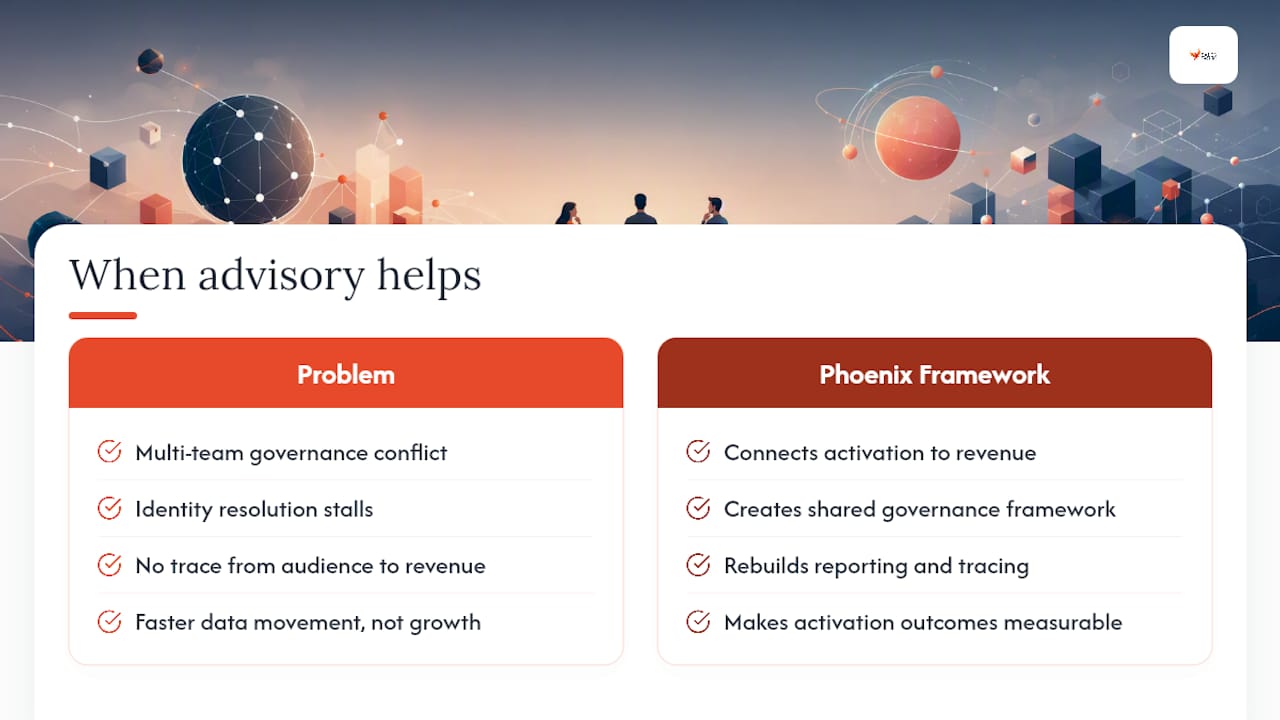
Sales-phoenix's Phoenix Growth Framework™ is built for exactly that gap. Rather than picking a platform for you, it focuses on connecting whatever activation layer you choose to measurable revenue outcomes, the kind of visibility most teams discover they're missing only after the sync is already running. One anonymized engagement pattern we've seen repeatedly: a services firm had activation technically working, but no one could trace which synced audience actually drove closed revenue until governance and reporting got rebuilt around a shared framework.
The lesson holds regardless of which platform you pick: activation without revenue visibility is just faster data movement, not growth.
— Hunter
A Faster Path to Revenue Visibility After Activation
Picking between a standalone activation platform and an ingestion-aligned one solves your data movement problem. It doesn't automatically solve the harder problem: knowing which synced audience, which campaign, or which sales workflow actually converted into revenue. That gap is where Sales-phoenix works differently from a typical implementation vendor.

Sales-phoenix's Revenue Intelligence service connects your activation layer, whichever architecture you land on, to the metrics your executive team actually cares about: close rates, pipeline velocity, and recovered revenue that was previously invisible. A typical first engagement starts with a focused Revenue Leak Assessment, mapping where leads, opportunities, or synced audiences are quietly falling through operational cracks before any new tooling gets layered on top.
The near-term outcome is visibility you didn't have before: a clear view of where revenue is leaking and a prioritized plan to fix it. If your team has activation running but no reliable way to tie it to revenue outcomes, book a Revenue Leak Assessment and get a concrete starting point instead of another platform decision to make alone.
Sources
- Census vs Hightouch (2026) Compared | DataStackGuide
- Hightouch vs. Census: Reverse ETL in 2026 | Orchestra
- Hightouch vs Census: Reverse ETL Compared | Modern DataTools
FAQ
How Much Does Hightouch Cost?
Pricing typically follows a consumption-based model tied to monthly active rows, though total cost depends heavily on destination count and sync frequency rather than a single flat rate, so get a quote based on your actual usage pattern before comparing sticker prices.
What Is the Main Difference Between Survey Data and Census Data?
In market research, survey data comes from a sample of respondents and is generalized to a broader population, while census data attempts to capture every unit in the population. In the reverse ETL context this article covers, "Census" refers to the data activation platform, not statistical census data, so don't confuse the two when researching either topic.
Can I Use Census Data for Business?
If you mean the reverse ETL platform, yes: it's built specifically for syncing business data out of your warehouse into GTM systems like Salesforce and HubSpot. If you mean government census data, business use is generally allowed for demographic and market research, though you should confirm licensing terms with the specific data provider.
Which Platform Fits a Marketing-Led Team Better?
A standalone activation platform with composable CDP features and no-code audience building typically fits marketing-led teams better, since it reduces dependency on engineering for day-to-day audience changes.
Which Platform Fits a dbt-First Data Team Better?
An ingestion-aligned activation tool with deep, native dbt support fits engineering-led teams better, since model dependencies, testing, and observability stay unified inside the same workflow the team already uses.