

MQLs are prospects marketing has assessed as a good fit who show real interest; SQLs are prospects sales has validated as ready for a direct conversation. Marketing owns the MQL stage and nurtures at scale. Sales owns the SQL stage and works leads one to one. The fix for most stalled pipelines isn't better leads. It's a governed handoff with clear criteria, a speed target, and someone accountable for what happens in between.
TL;DR:
- Most pipeline stalls result from unclear handoff criteria, speed targets, and accountability rather than poor lead quality.
- Effective lead scoring must weigh behaviors closer to purchase and incorporate firmographic data, recency, and contact verification to avoid over-weighting low-value signals.
- Implementing a formal sales acceptance step, strict SLAs, rejection recycling, and tracking handoff metrics can significantly reduce lead leakage.
- The ideal MQL to SQL conversion rate varies but generally hovers around double digits, with speed-to-contact and SQL-to-opportunity ratios being key benchmarks.
- Conducting a Revenue Leak Assessment helps identify specific bottlenecks between marketing qualification and sales engagement for targeted improvements.
Table of Contents
- MQL vs SQL: What an MQL Actually Looks Like
- What Is an SQL, and Why Does Sales Move Faster on It?
- MQL vs SAL vs SQL: A Side-by-Side Comparison
- Building Lead Scoring That Separates Interest From Readiness
- Handoff Governance: SAL, SLA, and Speed-to-Lead Rules
- MQL to SQL Conversion: How to Calculate It and What's Normal
- A Practical Playbook to Move More MQLs Into SQLs
- How Sales Phoenix Applies This Framework in Practice
- Alignment Over Dogma
- Stop Guessing Where Your Leads Are Leaking
- Sources
- FAQ
MQL vs SQL: What an MQL Actually Looks Like
Marketing owns the MQL stage. Its job is to spot fit and interest, then push qualifying contacts into scaled nurture, not a phone call. Gartner defines an MQL as a potential customer that marketing has reviewed and judged to meet the criteria for passing to sales. That review is the whole point: an MQL isn't just anyone who filled out a form. It's someone who matches your ideal customer profile and has shown enough behavior to suggest they're worth watching.
The signals that typically earn someone MQL status include:
- Downloading a gated asset (whitepaper, template, benchmark report)
- Attending a webinar or industry event
- Visiting the site repeatedly over a short window
- Signing up for a newsletter or resource hub
- Starting a free trial without touching pricing or setup for a sales call
None of these signal urgency. They signal curiosity. According to TechTarget, MQLs typically land in email nurture programs rather than a rep's queue, because the behavior only shows interest, not intent to buy.
Most teams manage this with marketing automation platforms that track lifecycle stage inside the CRM and apply lead-scoring rules to flag when someone crosses from anonymous visitor to MQL. A product-led business might see this as trial signups with no feature usage tied to team seats or billing. A services firm might see it as three blog visits and a case-study download in one week. The behavior looks different by motion. The underlying test doesn't: fit plus engagement, no purchase signal yet.
What Is an SQL, and Why Does Sales Move Faster on It?
Sales owns the SQL stage because an SQL has shown something an MQL hasn't: a real signal of buying intent, not just interest. Sales' job here is to confirm need, budget, authority, and timeline, then commit a rep's time to move the deal forward.
The behaviors that typically flip a contact from MQL to SQL include:
- Requesting a demo or asking about pricing directly
- Filling out a contact form that mentions budget or a target timeline
- Booking a meeting through a calendar link
- Visiting the pricing page multiple times in a short span
- Replying to outreach with a specific question about implementation or contract terms
Shopify's guide to the distinction lists demo requests, pricing inquiries, and budget-and-timeline forms as the clearest SQL tells, and that lines up with what most sales teams see in practice.
Once a lead hits SQL status, reps typically apply a qualification framework to confirm it's real before building a proposal. BANT (budget, authority, need, timeline) works fine for straightforward, transactional sales. CHAMP (challenges, authority, money, prioritization) fits better when the buyer's pain point matters more than their org chart. MEDDIC earns its complexity in enterprise deals with multiple stakeholders and a formal procurement process.
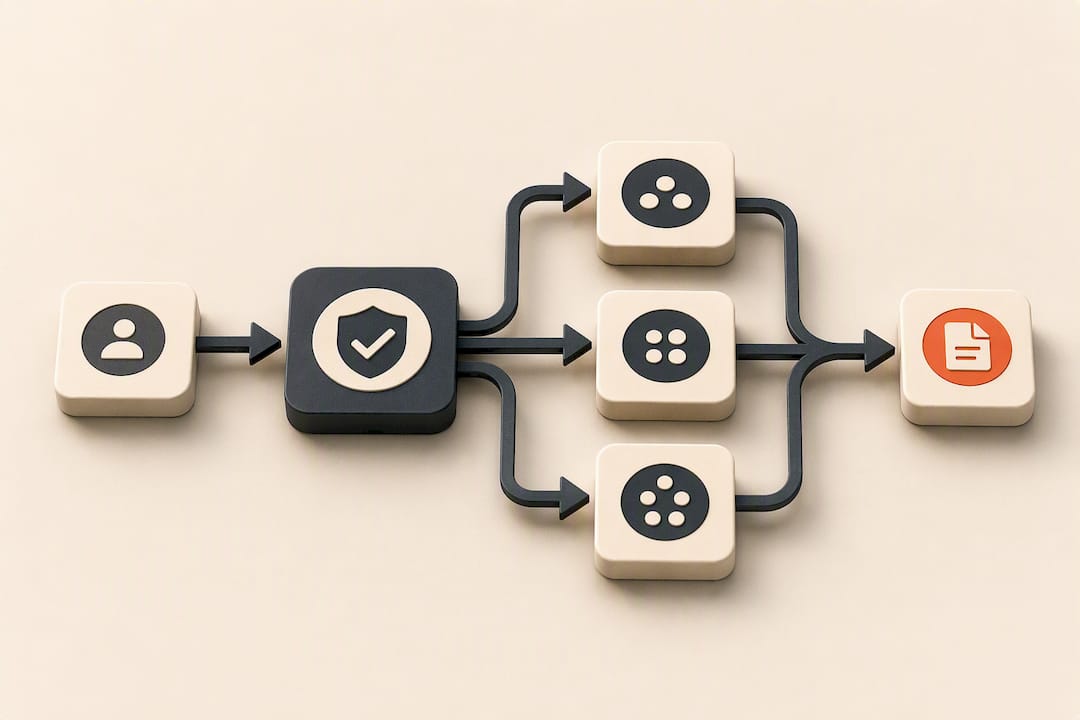
Timing matters more than the framework you pick. TechTarget's guidance recommends acting on an SQL within 24 hours. Teams selling high-intent, high-velocity products often tighten that to minutes, not hours.
MQL vs SAL vs SQL: A Side-by-Side Comparison
The fastest way to classify a lead correctly is to compare it against a simple reference table. Most confusion in a stalled pipeline traces back to a team skipping this exact comparison.
| Attribute | MQL | SAL | SQL |
|---|---|---|---|
| Funnel stage | Top to mid funnel, interest phase | Transition gate between marketing and sales | Mid to bottom funnel, active evaluation |
| Owner | Marketing | Sales (acceptance decision) | Sales |
| Core signal | Fit + engagement | Sales agrees the lead is worth working | Confirmed need, budget, authority, timeline |
| Typical action | One-to-many nurture | Accept or reject with a coded reason | One-to-one outreach and qualification |
| Next step | Continue nurture until score threshold is hit | If accepted, becomes SQL; if rejected, recycles to marketing | Move to opportunity or disqualify |
SAL, or sales-accepted lead, is the step most teams skip, and it's usually why marketing and sales argue about lead quality. LeadScale's lifecycle model puts SAL between MQL and SQL specifically so sales has to formally accept or reject a lead, with a coded reason attached to every rejection. Without that gate, marketing counts a lead as "sent to sales," sales never actually works it, and both sides think the other one dropped the ball.
Picture the same contact moving through all three stages. On Monday, she downloads a pricing guide and gets scored as an MQL. On Tuesday, a rep reviews the record, confirms she works at a company in your ICP, and accepts her as SAL. On Thursday, she books a demo and asks about annual contract terms; now she's an SQL, and the clock on that conversation is running.
Building Lead Scoring That Separates Interest From Readiness
Good lead scoring answers one question: is this behavior worth marketing's time, or does it need a rep right now? Get that wrong and you either flood sales with unready leads or bury genuine buyers in a nurture sequence for weeks.
- Start with behavioral points. Weight actions by how close they sit to a buying decision. A pricing-page visit should count for more than a blog read.
- Layer in firmographic fit. Company size, industry, and role should gate the score, not just add to it. A perfect ICP match with low engagement still isn't ready; a poor fit with high engagement usually isn't either.
- Factor in recency. A burst of activity last week matters more than the same activity spread over six months. Old engagement decays for a reason.
- Run a verification check before anything moves. TechTarget notes that scoring commonly draws on email opens, clicks, site visits, and form completions, and those signals only mean something when tied to a real, reachable contact.
- Lock thresholds with change control. Once you set the score that triggers MQL status, don't let one team quietly adjust it. Score drift, where thresholds creep without anyone noticing, is one of the most common reasons sales starts distrusting marketing's leads.
The biggest scoring mistake is over-weighting low-value events, like counting every email open the same as a demo request. The second biggest is skipping data quality entirely. A lead that clears the engagement threshold but has no verified phone number or work email should never reach sales. A tool like the customer intelligence layer in your stack can help track which behavioral signals actually predict conversion for your specific business, rather than borrowing generic weights from a template.
Pro Tip: Require a validated work email or direct phone number as a hard gate before any lead crosses into MQL, not after. Fixing bad contact data after the handoff wastes more rep time than any scoring flaw.
Handoff Governance: SAL, SLA, and Speed-to-Lead Rules
Governance is what turns MQL and SQL from labels into a system that actually holds people accountable. Without it, "marketing qualified" and "sales qualified" become opinions, not stages.
- Insert a formal SAL step. Sales reviews every MQL that crosses the threshold and either accepts it (it becomes SAL, then SQL once intent confirms) or rejects it with a coded reason: bad fit, bad data, wrong timing, duplicate.
- Set an acceptance window. Give sales a fixed period, often 24 hours, to accept or reject an MQL before it's flagged as stalled.
- Set contact-time targets by intent tier. High-intent signals like a demo request often warrant contact within minutes; standard MQLs that clear SAL can wait a few hours without losing much ground.
- Build a reject-and-recycle path. Rejected leads shouldn't disappear. Route them back into a different nurture track based on the rejection code, and revisit them later with fresh triggers.
- Track handoff leakage as a metric, not a feeling. Measure how many MQLs never get an SAL decision at all. That gap is often where the real revenue loss hides.
LeadScale's research points to fast contact as one of the biggest levers on qualification odds, which is why speed-to-lead targets need to flex by tier instead of using one blanket rule for every lead. A tool built around sales performance tracking can surface exactly where leads stall between MQL and SAL, which is usually the leak nobody's watching.
MQL to SQL Conversion: How to Calculate It and What's Normal
The formula is simple: MQL-to-SQL conversion rate = (SQLs ÷ MQLs) × 100.
If your team generated 500 MQLs last quarter and 65 of them became SQLs, that's a 13% conversion rate. Directional data from agency reports cited in LeadScale's lifecycle research puts some B2B SaaS samples in that same low double-digit range, though the number swings widely depending on industry, deal size, and how tightly a team defines each stage.
Treat any benchmark as a rough compass, not a scorecard. A company with a strict MQL threshold and a loose SQL definition will show a high conversion rate that means nothing next to a company running the opposite setup.
Three numbers matter more than the headline conversion rate:
- Speed-to-contact, how fast a rep reaches out after SAL acceptance.
- SQL-to-opportunity rate, how many SQLs actually turn into a real pipeline deal.
- SAL acceptance rate, how many MQLs sales agrees are worth working at all.
None of these numbers mean anything if marketing and sales don't agree on what counts as an MQL or SQL in the first place. Alignment on definitions has to come before any benchmark conversation, or you're comparing two different metrics wearing the same name.
A Practical Playbook to Move More MQLs Into SQLs
Turning interest into readiness takes deliberate design, not just more emails. Here's a sequence you can run this quarter.
- Segment nurture by intent tier. Low-intent leads get educational content on a slow cadence. Medium-intent leads get case studies and comparison content weekly. High-intent leads (repeat pricing visits, trial activity) get a direct, personal outreach attempt within days, not weeks.
- Build escalation triggers that skip the queue. A pricing-page visit, a demo request, or three visits to a key product page in one week should auto-promote a lead to SAL review, bypassing the normal nurture timeline.
- Mix channels before you go outbound. Email nurture, retargeting ads, and in-app messages (for trial users) all move a lead along. Reserve cold outbound calling for leads that stall past a reasonable window despite genuine fit.
- Run one experiment at a time. Pick a hypothesis (say, "cutting the SAL acceptance window from 48 to 24 hours raises SQL conversion"), define the metric, set a sample size, run it for a fixed period, and write down your success criteria before you start, not after you see the results.
Pro Tip: Test one variable per experiment. Changing the nurture cadence and the scoring threshold in the same quarter makes it impossible to know which change actually moved the number.
How Sales Phoenix Applies This Framework in Practice
The Phoenix Growth Framework™ starts by mapping where leads actually stall, not where a team assumes they stall. That means pulling the raw handoff data: how many MQLs get an SAL decision, how long that decision takes, and what rejection codes show up most often.
The typical fixes aren't exotic: cleaning up contact data before handoff, enforcing an SLA that sales actually follows, correcting lead routing so the right rep gets the right lead, and rebuilding nurture tracks for leads that get rejected instead of losing them.
Readers can run the same diagnostic without a consultant: pull your SAL acceptance rate, check your average speed-to-contact, and see how many rejected leads ever get worked again. The pattern usually shows up in the first pull. The Phoenix Growth Framework applies that same diagnostic sequence at a deeper, funnel-wide level.
Alignment Over Dogma
Rigid stage definitions matter less than whether marketing and sales agree on what "ready" means and measure it consistently. Simple funnels can skip formal gates; complex enterprise sales or high-volume outbound motions usually need SAL as a checkpoint. Run small experiments, record why leads get rejected, and let the data update your thresholds instead of defending them out of habit.
— Hunter
Stop Guessing Where Your Leads Are Leaking
If your MQL-to-SQL numbers look fine on a dashboard but revenue still feels stuck, the leak is probably happening in the handoff nobody's tracking. That's the specific gap a revenue growth framework is built to find. Instead of another generic sales training or a CRM overhaul, you get a data-driven diagnosis of exactly where leads stall between marketing's definition of "qualified" and sales actually working the account.
The typical engagement runs in three moves: an assessment of your current MQL, SAL, and SQL criteria and data quality; a prioritized list of fixes, usually SLA enforcement, routing corrections, and nurture rebuilds; and ongoing measurement to confirm the fixes hold. If your handoff has never been formally audited, a Revenue Leak Assessment is the direct next step, and you can see the full range of engagement options on the services page.
Sources
- What is a marketing-qualified lead (MQL)? — TechTarget
- MQL vs SQL vs SAL: Lead Lifecycle Rules — LeadScale
- MQL vs SQL — Shopify blog
FAQ
What Comes First, MQL or SQL?
MQL comes first. A lead earns MQL status through fit and engagement, then moves through an SAL acceptance step before it can become an SQL once it shows confirmed buying intent, per LeadScale's lifecycle model.
What Is a Good MQL to SQL Ratio?
Directional benchmarks from agency data put some B2B SaaS conversion rates around the low double digits, roughly 13% in certain samples cited by LeadScale. Treat that as a rough guide, since the ratio shifts heavily depending on how strictly your team defines each stage.
What Are Examples of MQL Behavior?
Common MQL signals include downloading a gated asset, attending a webinar, visiting the site repeatedly, or signing up for a trial without touching pricing, according to Shopify's guide. These behaviors show interest but not yet a concrete intent to buy.
How Do You Calculate MQL to SQL Conversion?
Divide the number of SQLs by the number of MQLs and multiply by 100. If 65 out of 500 MQLs became SQLs in a quarter, that's a 13% conversion rate, a calculation worth running consistently once your team locks its MQL and SQL definitions.
Does Sales-phoenix Help Fix a Weak MQL to SQL Conversion Rate?
Yes. A proprietary growth framework specifically targets handoff leakage between marketing and sales, and a Revenue Leak Assessment is the direct starting point for teams that want a diagnosis of where their conversion rate is actually breaking down.